


Florida Immigration Law: A 2025 Florida immigration law created immediate fear among many in the immigrant community.
An encounter with police, a traffic stop, a job application, or a plan to drive across state lines can suddenly feel dangerous. But people need to separate what Florida lawmakers passed from what courts have actually allowed the state to enforce.
The most urgent recent development is the Florida Immigration Law (Senate Bill 4-C), enacted in February 2025. The law attempted to impose state criminal penalties on certain individuals who enter or reenter Florida after entering the United States without inspection.
It was designed to give Florida law enforcement a direct role in immigration enforcement, an area traditionally controlled by the federal government.
That distinction matters. A law can be signed, heavily publicized, and still be blocked by a federal court. The Florida Immigration Law, also referred to as SB 4-C, has faced major constitutional litigation, and federal court orders have prevented its enforcement while the case proceeds.
Anyone hearing that Florida police can automatically arrest every undocumented person under this law should not make decisions based on headlines alone. The legal status of an immigration-related state law can change through injunctions, appeals, or new court orders.
What the New Florida Immigration Law Tried to Do
This Florida Immigration Law (SB 4-C) sought to make it a state crime for certain noncitizens to enter or reenter Florida after an unlawful entry into the United States. The proposal raised immediate concerns because immigration law is primarily federal law.
Federal agencies decide how immigration violations are handled, whether someone may seek asylum, whether they qualify for relief, and whether removal proceedings should move forward.
The law also created serious practical concerns for mixed-status families. A person may have a pending asylum application, Temporary Protected Status, a family-based immigration case, a U visa application, VAWA protections, or another form of relief that is not obvious during a roadside encounter.
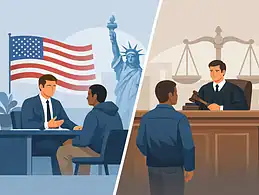
A local officer is not an immigration judge and should not be making final decisions about a person’s right to remain in the country.
Federal litigation challenged the Florida Immigration Law, particularly SB 4-C, on the grounds that Florida cannot create its own immigration-entry crimes where Congress has already established a federal system. A federal court issued an injunction blocking enforcement. That means the law’s existence on paper does not automatically give an officer authority to arrest under its provisions.
Florida Immigration Law: An injunction is not the same as a repeal
Though portions of this Florida Immigration Law were blocked, that may not be sufficient on its own. A blocked law is not necessarily gone forever.
The state may appeal, courts may modify an injunction, and legislators may attempt a revised version. This is why immigrants and families should be cautious about relying on old social media posts, videos, or secondhand advice.
Before making a travel, employment, criminal case, or family reunification decision, confirm the current enforceability of the rule. A legal development from last month may be outdated by the time it reaches your phone.
Florida Immigration Law: SB 1718 Still Matters for Daily Life in Florida
When people search for the new Florida immigration law, they may also be referring to Senate Bill 1718, the sweeping 2023 law that changed several areas of life for immigrants in Florida.
Unlike the later entry-crime proposal, the 2023 Florida Immigration Law, known then as SB 1718, reached into employment, transportation, identification, health care reporting, and criminal enforcement.
The most visible work-related provision expanded Florida’s E-Verify requirements. Private employers with 25 or more employees must use E-Verify for new hires.
Employers that knowingly fail to comply can face escalating penalties, including suspension or revocation of business licenses in serious cases.
For workers, this means paperwork errors and inconsistent information can become more dangerous. It does not mean every immigrant is ineligible to work. Employment authorization may be granted through asylum status or pending applications.
Such applications may include Temporary Protected Status, parole, DACA, a green card (where applicable), or another federal immigration category. The critical issue is whether the person has valid authorization and whether the employer completes the hiring process lawfully.
Florida also imposed restrictions affecting certain driver’s licenses issued by other states to people who cannot prove lawful immigration status.
Because license rules and enforcement consequences can be fact-specific, do not assume that a license accepted in one state will be treated the same way in Florida. Driving without a valid license can create a criminal matter that later becomes an immigration problem.
Florida Immigration Law: Criminal Charges Can Trigger Immigration Exposure
Florida immigration laws cannot be viewed separately from Florida criminal law. An arrest does not automatically mean deportation, but an arrest can place immigration status under a microscope. Even a minor charge can create risks of bond revocation, ICE detention, inadmissibility, deportability, future naturalization, or discretionary relief.
The danger is especially great when someone accepts a plea to get out of jail quickly. A plea that appears minor under Florida law may carry severe immigration consequences under federal law.
In some cases, the sentence imposed, the wording of the statute, or the specific conduct alleged in the charging document can matter as much as the offense label.
Do not assume a withheld adjudication is immigration-safe. Do not assume probation is harmless. Do not assume a case dismissed after a plea has no effect. Immigration law uses its own definitions, and those definitions do not always match what a criminal court calls a conviction.
If you are not a U.S. citizen and are facing a criminal charge in Florida, immigration consequences must be evaluated before entering a plea. Waiting until after a conviction can sharply limit available options.
Florida Immigration Law: What to Do If You Are Stopped or Questioned
Fear causes people to volunteer information they are not legally required to provide. A calm, limited response is usually safer than guessing, arguing, or presenting false documents.
If you are stopped by law enforcement, ask whether you are free to leave. If the answer is yes, leave calmly. If you are being detained, state that you want to remain silent and want to speak with an attorney.
Do not sign documents you do not understand, especially documents involving voluntary departure, removal, stipulated removal, or admissions about immigration history.
You should never lie about your identity or immigration status, use someone else’s documents, or provide false documents to an officer or employer. Those actions can create separate criminal and immigration consequences that are often more difficult to resolve than the original issue.
If officers come to your home, do not open the door just because they ask. Ask them to show a warrant. An administrative immigration warrant is not the same as a judicial warrant signed by a judge. The wording, signature, and scope of the document matter.
Florida Immigration Law: Families Should Build a Legal Safety Plan Now
A legal safety plan is not an admission that someone has done anything wrong. It is a practical response to uncertainty. Families with immigration concerns should keep copies of passports, immigration receipts, work permits, court notices, pending applications, and attorney contact information in a secure place.
A trusted adult should know where children can go if a parent is unexpectedly detained.
This is particularly important for people with pending applications. A missed biometrics appointment, immigration hearing, request for evidence, or deadline can damage a case even if the underlying person may qualify for relief. Keep your address current with the appropriate immigration agency and read every notice carefully.
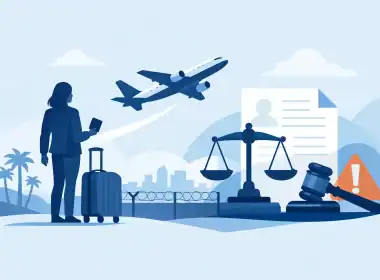
For people considering travel, the answer depends on status and case posture. Advance parole is not a blanket guarantee of reentry. A pending asylum case, a prior removal order, an unlawful presence history, a criminal arrest, or an unresolved immigration issue can change the risk analysis.
Travel should be reviewed before tickets are purchased, not after a person is already outside the United States.
Florida Immigration Law: Do Not Let Rumors Make the Decision for You
The public conversation around Florida immigration enforcement is often louder than the legal reality. Some risks are real. Florida’s employment, identification, transportation, and criminal enforcement rules can expose people to serious consequences. At the same time, court orders can limit a law that politicians claim is fully active.
The safest approach is to identify the exact issue: an arrest, a driver’s license question, an E-Verify problem, a pending asylum case, a VAWA self-petition, travel, or a prior removal order.
Then evaluate that issue under the law that is enforceable now, not the law as described in a viral post.
The most protective step is not to panic. Getting accurate, up-to-date advice before a traffic stop, plea deal, job decision, or travel plan can turn a manageable immigration issue into a permanent one.
For more legal informative content like this, please visit our website at https://blog.cruise.law or our content-only blog at https://www.tyrese.esq, where content on a wide range of issues is posted daily. Follow Attorney Cruise on Instagram @attorney.cruise or the law firm’s Instagram Account @cruiselawgroup.
Disclaimer: This post is for informational purposes only and does not constitute legal advice. Laws change, and outcomes depend on individual facts. Consult a qualified attorney for guidance specific to your situation.
Cruise Law Group is a Florida-based Law Firm, and any posts on criminal defense matters apply SOLELY in Florida. The Firm is located in Orlando, Florida, and can be reached via EMAIL or CALL.
CLG: +14076748822