



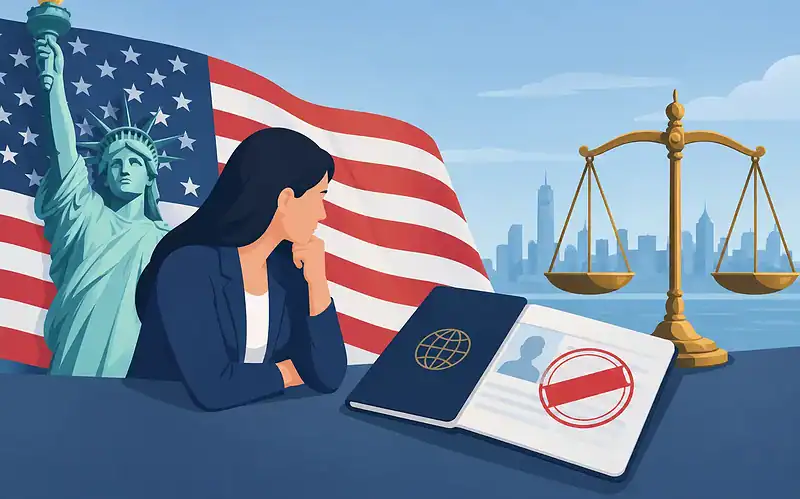
A visa revocation can turn a planned trip, a job, or a family visit into an immigration emergency without much warning. If you are asking, why was my visa revoked, do not assume the government made a mistake – but do not assume you have no options either. The reason, timing, and wording of the notice can determine whether you need to stay in the United States, seek a new visa abroad, respond to a government request, or prepare for a larger immigration problem.
The first rule is simple: do not travel until a qualified immigration attorney has reviewed your situation. A revoked visa can prevent your return to the United States even when you have a pending immigration case, a valid passport, a job, or close family here.
What a Visa Revocation Actually Means
A visa is the document in your passport that permits you to ask for admission at a U.S. port of entry. It is not the same thing as your immigration status in the United States. The Department of State may revoke a visa under federal immigration law, including after it has already been issued.
For many people, this distinction matters immediately. If you are physically inside the United States when a visa is revoked, the revocation does not automatically mean you are unlawfully present or that you must leave that same day. Your ability to remain may depend on your I-94 record, your approved petition, a pending adjustment application, asylum case, parole, or another form of authorized stay.
But if you leave the United States after a visa revocation, you generally cannot use that visa to return. You may need to apply for a new visa at a U.S. consulate, and the issue that caused the revocation will likely be examined again.
Why Was My Visa Revoked? Common Reasons
The Department of State may revoke a visa when it receives information suggesting that the person may no longer qualify for it or may be inadmissible to the United States. Sometimes the government provides a specific explanation. Often, the notice is brief and leaves the person with more questions than answers.
A criminal arrest, charge, or new record
A DUI arrest, domestic violence allegation, drug allegation, theft charge, or other criminal matter can trigger visa scrutiny. An arrest is not a conviction, and a dismissed charge is not automatically an immigration violation. Still, consular officials may revoke a visa while they investigate whether the underlying conduct affects admissibility, public safety concerns, or the person’s eligibility.
This is especially serious for noncitizens in Florida facing criminal allegations. Do not accept a plea, diversion program, or “time served” disposition without understanding the immigration consequences. A result that appears favorable in criminal court can still create major visa and immigration exposure.
Suspected immigration violations or status problems
A visa can be revoked if the government believes you overstayed, worked without authorization, violated the terms of a student or exchange program, misused a visitor visa, or otherwise failed to comply with the category under which the visa was issued.
For example, a B-1/B-2 visitor visa is not permission to live permanently in the United States or perform unauthorized employment. An F-1 student who stops attending school, or an exchange visitor who fails to follow program rules, may face questions about whether they maintained status. The facts matter. A record error, school reporting issue, or misunderstanding should be addressed with documentation, not guesswork.
New information from background checks or government databases
Visa decisions can change after issuance because government databases are updated, agencies share information, or a consular officer receives information not available during the original interview. The issue may involve an old arrest, a prior immigration encounter, a name match, a security-related concern, or alleged fraud.
A revocation notice based on unclear or incomplete information should be taken seriously. Do not send an emotional response or make broad admissions in an effort to explain yourself. First determine what agency acted, what the notice says, and which records can confirm or correct the facts.
Fraud or alleged misrepresentation
The government may revoke a visa if it believes a person made a false statement, submitted altered documents, concealed a material fact, or misrepresented the purpose of travel. These accusations can have consequences far beyond one visa. A finding of fraud or willful misrepresentation may create a long-term or permanent inadmissibility issue unless a waiver is available.
Marriage-based cases, visitor visas, work visas, and prior border encounters can all receive close scrutiny. A relationship that is legitimate, an employer that is real, or a prior statement that was misunderstood may still require careful proof.
A change in eligibility
Some visas are tied to a particular purpose: study, employment, an approved petition, cultural exchange, or temporary business activity. If the underlying circumstances change, the visa may no longer fit. An employment petition may be withdrawn, a school program may end, or facts disclosed in a later application may conflict with the original visa application.
This does not always mean misconduct occurred. It does mean the government may require a new application or further review before issuing another visa.
Do Not Confuse Visa Revocation With Loss of Status
This is where many people make costly decisions. Your visa stamp, I-94, and immigration status are related but different.
If you are in the United States with a revoked visa, check your most recent I-94 expiration date and the status connected to your stay. If you have an approved H-1B petition, for example, a revoked visa stamp may stop international travel but may not immediately end your authorized stay. If you are pursuing adjustment of status, asylum, VAWA relief, or another immigration benefit, leaving the country without legal advice may place that case at risk.
There are exceptions and complications. A revoked visa can be part of a broader enforcement concern, and some revocations may signal that the government believes you are inadmissible. That is why a quick review of your actual documents matters more than informal advice from friends or social media.
What to Do Immediately After a Visa Is Revoked
Start by preserving every document. Save the email or letter from the Department of State, take clear copies of your visa and passport, and collect your I-94, approval notices, court records, travel history, and prior visa applications if available. The exact language in the revocation notice may reveal whether this is a temporary prudential revocation, a request for further processing, or an issue requiring a new visa application.
Next, confirm whether you are inside or outside the United States. If you are abroad, do not buy nonrefundable tickets based on the assumption that the matter will be fixed quickly. Consular processing can involve administrative processing, updated forms, medical examinations, police certificates, or a new interview.
If you are inside the United States, avoid international travel until you understand the consequences. Advance parole is not a substitute for a valid visa in every situation, and travel can be especially risky for people with prior unlawful presence, criminal history, removal issues, or pending applications.
You should also review whether there is a criminal case, prior removal order, missed immigration hearing, status violation, or inaccurate record connected to the revocation. Gather records before discussing the case with a consulate or government officer. Accuracy matters. A rushed answer can create a statement the government later uses against you.
Can You Get a New Visa After Revocation?
Sometimes, yes. A revocation does not automatically create a permanent bar to a future visa. But the path forward depends on the reason for the action. A person whose visa was revoked after a DUI arrest may need to resolve the criminal matter and complete additional medical screening. A person accused of misrepresentation may need to address a much more serious inadmissibility issue and, where available, pursue a waiver.
Do not treat a new visa application as a fresh start where prior events disappear. Consular officers can review prior applications, travel records, arrests, immigration history, and information from other agencies. The strongest cases are prepared with a clear timeline, complete records, and an explanation that is truthful, specific, and supported by evidence.
For more legal informative content like this, please visit Cruise Law Group’s website blog or its content-only legal blog.
Disclaimer: This post is for informational purposes only and does not constitute legal advice. Laws change, and outcomes depend on individual facts. Consult a qualified attorney for guidance specific to your situation.
A visa revocation is a warning that the government is reassessing your ability to travel to the United States. Treat it as a time-sensitive legal issue, protect your records, and get case-specific guidance before one wrong trip or response creates a problem that is harder to undo.